
Volunteer with Elephants in Africa: EHRA's Approach to Human-Elephant Coexistence
As part of the Foundation's activities, we have chosen to raise awareness of volunteering opportunities that make a meaningful contribution to wildlife conservation and community well-being. Our aim is to introduce trustworthy organisations, explain how they operate through our social media awareness programme, highlight their impact, and help people seeking genuine and meaningful experiences identify reputable opportunities.
Our recommendations are based on direct experience with volunteer organisations, ongoing contact with their teams, and regular assessment of the impact of their work.
EHRA: Protecting Namibia's Desert-Adapted Elephants Through Coexistence
We wanted to include EHRA among the organisations that we actively support and promote.
Founded in 2003, EHRA has been working in the field ever since.
Their mission statement reads:
"Since 2003, Elephant-Human Relations Aid (EHRA) has been dedicated to implementing holistic solutions to human-elephant conflict.
We assess the diverse ways free-roaming elephants affect people's lives and livelihoods, and trial and apply effective measures that promote peaceful coexistence.
Our ultimate aim is to safeguard elephant populations beyond National Park boundaries by employing strategies centred on harmonious living and habitat protection."
EHRA operates in Namibia, in the Northern-western region.

EHRA, an example of regenerative and responsible tourism
More than twenty years later, it is easy to understand why EHRA received the Silver Award for Regenerative Tourism in April 2026. The award recognises initiatives that go beyond sustainable tourism and create lasting benefits for local communities, wildlife, and the environment.

EHRA, which stands for Elephant-Human Relations Aid, was started out of a need to help people coexist with elephants because they were shot as a result of human-elephant conflict.
EHRA operates as a volunteer programme dedicated to reducing human-elephant conflict and promoting peaceful coexistence. Its work focuses on protecting human settlements and infrastructure, while ensuring that elephants have access to water sources specifically designed for their use.
What Does Volunteer WITH ELEPHANTS MEAN at EHRA
The volunteer programme operates on a two-week cycle, divided into a Build Week and a Patrol Week.
Build Week
The programme begins at the EHRA camp following the final preparations in Swakopmund. After several hours of travel, volunteers arrive at the operational base where they prepare for the week ahead.
The following da
y, all the equipment required for the expedition is loaded onto trailers. Tents, food supplies, construction tools, building materials, swags, cooking equipment, and personal gear are packed before the team departs for the work site.
The objective is to establish a temporary camp as close as possible to the wall construction site. Operating under a strict leave-no-trace approach, the camp remains intentionally simple, offering volunteers the rare opportunity to sleep beneath the stars in one of the world's oldest deserts.
Once camp has been established, the work begins. Daily schedules may vary slightly depending on the season and operational requirements, but generally follow the same structure:
6:00 – Duty team lights the fire and prepares hot drinks
6:30 – Wake-up call
8:00 to 10:00 – Construction work
10:00 to 10:30 – Tea break
10:30 to 12:00 – Construction work
12:00 to 14:00 – Lunch and rest period
14:00 or 14:30 to 17:00 – Construction work
The primary objective of Build Week is to contribute to the construction of protective walls around critical infrastructure. These walls consist of a double layer of rock filled with cement and are typically built three to four metres from the borehole, solar installations, water tanks, and associated infrastructure they are designed to protect.
Alongside these protective structures, water points are maintained at a significant distance from villages and settlements. Community members are responsible for ensuring these water sources remain operational, clean, and attractive to elephants, encouraging them to use these alternative locations rather than approaching human settlements.
Life in camp is organised collectively. Volunteers rotate through duty teams responsible for preparing meals, maintaining the camp, collecting firewood where appropriate, washing dishes, and managing daily tasks. Everyone contributes to camp life, creating a strong sense of teamwork and providing valuable life skills, particularly for younger participants.


Patrol Week
Patrol Week focuses on elephant monitoring, data collection, and education. It provides volunteers with a deeper understanding of desert-adapted elephants and the challenges associated with human-elephant coexistence.
Activities vary according to current conservation priorities and field conditions, but may include:
Direct observation of elephant herds to identify individual animals and assess their health and body condition.
Responding to reports of human-elephant conflict by providing assistance, gathering information, and providing guidance.
Supporting conflict-prevention efforts by helping to redirect elephants away from settlements when their projected movements indicate a potential risk.
Patrol Week allows volunteers to contribute directly to field-based conservation while gaining a practical understanding of the realities of living alongside free-roaming elephants in north-west Namibia.
Patrol Week often feels like the reward for the hard work completed during Build Week. It gives volunteers the opportunity to deepen their understanding of elephant behaviour, the surrounding ecosystems, and the remarkable plants and wildlife that have adapted to survive in this harsh environment.


Boulton's Namib day gecko Desert toktokkie Black-backed Jackal Baboon Meerkat Ostriches Camelthorn seed pods (Vachellia erioloba) Rock Kestrel Damara Red-Billed Hornbill Ostriches
A chance to see other form of wildlife in the monitoring area.


Depending on operational needs and field assignments, the patrol team may adopt a more mobile approach, moving camp regularly and sometimes spending each night in a different location.
Volunteers of all ages and nationalities are welcome. The experience offers far more than the opportunity to contribute to conservation. Participants often leave with:
The satisfaction of contributing to meaningful work with a visible and lasting impact.
A sense of achievement gained through physical effort, perseverance, and seeing the direct results of their contribution.
New and long-lasting friendships formed through shared experiences in the field.
Access to spectacular landscapes rarely seen by most visitors to Namibia.
The opportunity to step away from the routines and distractions of everyday life.
Valuable experience of living and working as part of a close-knit community.
Memorable evenings spent around the campfire, sharing stories and ideas.
A deeper understanding of elephants, their behaviour, and their ecological importance.
Insight into the unique ecosystems of north-west Namibia.
The opportunity to discover new cultures and engage with local communities.
A daily rhythm shaped by natural light, weather conditions, and the demands of field work.
A greater appreciation of the challenges and opportunities associated with human-elephant coexistence.
Memories and experiences that remain long after the programme has ended.
Volunteer participation remains an important source of income for EHRA's operations. In its early years, volunteer contributions provided much of the funding required to support the organisation's activities. As EHRA has grown and expanded the scale of its work, it has gradually diversified its sources of revenue to strengthen the long-term sustainability of its programmes.
The chart below illustrates the different sources of income that support EHRA's activities.

Volunteer contributions can fluctuate significantly from year to year and cannot serve as the organisation's sole source of funding.

Over the years, EHRA has expanded both its activities and its funding model. Since its creation in 2003, the organisation has developed a range of complementary programmes aimed at reducing human-elephant conflict and supporting long-term coexistence between people and wildlife.
Why Namibia's Desert-Adapted Elephants Need Protection
To understand EHRA's work, it is first necessary to understand both the human-elephant conflict and the challenges faced by Namibia's desert-adapted elephants.
These elephants roam freely across vast landscapes in north-west Namibia. Although often described as desert environments, these areas are not completely devoid of human activity. Villages, commercial farms, water sources, roads, and tourism operations all share the same landscape as the elephants.
Over generations, these elephants have adapted to survive in one of the harshest environments on Earth, where food and water can be scarce for extended periods. Despite these adaptations, elephants remain exceptionally large animals with considerable daily requirements. An adult elephant may consume up to three hundred kilograms of vegetation and drink around two hundred litres of water each day.
Their survival is challenged by a combination of factors:
Increased mortality during periods of severe drought, which may become more frequent and intense as climatic conditions change.
Progressive pressure on available habitat and natural resources, leading to more frequent interactions between elephants and people.
Human-elephant conflict arising when elephants damage infrastructure, water installations, crops, or commercial farming operations.
The risk that some elephants may be classified as problem animals when repeated incidents occur or when human safety is considered at risk.
Inappropriate interactions with tourists and guides. When established viewing protocols are not respected, elephants may become habituated to vehicles or people, potentially altering their natural behaviour and endangering humans and themselves at the same time.
These challenges demonstrate why coexistence requires active management. Protecting elephants is not only about safeguarding the animals themselves, but also about ensuring that local communities can live and work safely alongside them.
EHRA operates across several regions of north-west Namibia, monitoring multiple elephant herds and collecting long-term data on their movements, behaviour, health, and population dynamics.

Through regular field observations and systematic data collection, EHRA is able to monitor changes in population size, track individual elephants, and identify emerging conservation challenges.

The data collected over many years provides valuable insights into the status of individual populations and their long-term prospects.
In the Ugab River population, no population growth has been recorded since 2012, raising concerns about the long-term viability of this group. In 2024, three newborn calves from the Ugab River West population died shortly after birth. By comparison, in the Huab River West population, two of the three calves born during the same period survived.
These contrasting outcomes highlight the importance of continued monitoring and research. EHRA works closely with a range of stakeholders to investigate and address the factors that may be affecting elephant survival. Beyond drought and human-elephant conflict, these factors may include health-related issues, reproductive challenges, habitat conditions, and other environmental pressures.
To better understand the calf mortality observed in the Ugab River West population, EHRA has established partnerships with veterinary specialists who are contributing expertise and scientific analysis to the investigation.
Over the years, EHRA has evolved considerably. What began primarily as a volunteer-based initiative focused on mitigating human-elephant conflict has developed into a multifaceted conservation organisation.
Today, its work combines field research, population monitoring, conflict mitigation, community engagement, environmental education, infrastructure protection, and volunteer participation. Each programme contributes to the same objective: creating the conditions for people and elephants to coexist successfully across north-west Namibia.
The timeline below illustrates the evolution of EHRA and the expansion of its activities since 2003.

What Makes EHRA Different from Other Conservation Organisations
The following programmes illustrate the scale of EHRA's work today and demonstrate how the organisation approaches human-elephant coexistence from multiple angles.
Understanding Human-Elephant Conflict
Effective conflict mitigation begins with understanding the causes, locations, and frequency of human-elephant interactions.
EHRA records and analyses conflict incidents across its operational areas, allowing the organisation to identify patterns, assess risks, and develop appropriate responses for both communities and elephants.
The data collected also provides valuable insight into the consequences of conflict for elephant populations.


By understanding where and why conflicts occur, EHRA can focus its efforts on prevention.
Building the Conditions for Coexistence
Water Point Protection
Protecting water infrastructure remains one of EHRA's longest-running activities and is largely supported through the volunteer programme described earlier.
Protective walls are constructed around boreholes, solar installations, water tanks, and associated infrastructure that are vulnerable to damage by elephants seeking access to water.
These structures help reduce conflict, minimise repair costs for communities, and protect essential water supplies for people living in remote areas.

Drinking Dams
Alongside the protection of community infrastructure, EHRA supports the development and maintenance of alternative water sources for elephants.
When a village is equipped with solar-powered water infrastructure, a drinking dam may be established at least eight hundred metres from the settlement. These water points provide elephants with reliable access to water away from human activity.
Participating communities agree to maintain these dams and ensure that they remain operational and attractive to elephants. This collaborative approach helps reduce the likelihood of elephants approaching villages in search of water.
The objective is simple: provide a practical solution that benefits both people and elephants.

Collaring Elephants
Elephant collaring plays an important role in understanding elephant movements and improving conflict mitigation strategies.

Selected elephants are fitted with GPS collars that can operate for up to four years and transmit location data on an hourly basis. This information allows EHRA to monitor movements in near real-time and build a detailed understanding of how elephants use the landscape.
The data collected helps identify movement corridors, seasonal patterns, preferred water sources, and areas where conflict is most likely to occur.
One of the most valuable applications of this information is the establishment of geofencing systems. When collared elephants approach villages or areas of concern, alerts can be generated, allowing communities to prepare and reducing the likelihood of unexpected encounters.
GPS tracking also reveals the remarkable distances travelled by desert-adapted elephants as they move across vast and challenging environments.

The information gathered through elephant collaring has also contributed to broader conservation research. In 2023, GPS data supported the study Using Satellite Imagery to Build Foundation of Elephant Corridors, conducted by Japheth Kimeu of Connected Conservation Foundation.
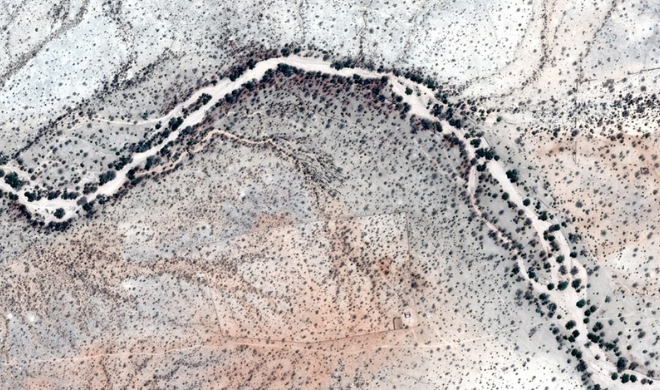
In 2023, EHRA partnered with the Connected Conservation Foundation and the Airbus Foundation to launch a landscape-scale study aimed at improving understanding of the movements of Namibia's desert-adapted elephants.
By combining high-resolution satellite imagery, GPS collar data, and local knowledge, the project sought to identify key movement routes, better understand elephant behaviour, and develop more effective strategies for reducing human-elephant conflict.
The study provided valuable insights into how elephants use the landscape and the factors influencing their movements. Among the key findings were:
Elephants generally avoid human settlements whenever possible, highlighting the importance of preserving natural habitats and limiting further human encroachment into key elephant areas.
Movement patterns are strongly influenced by access to reliable water sources and healthy vegetation.
The search for water remains one of the primary drivers of elephant movements. In some cases, elephants may break fences or follow existing fence lines while attempting to reach water sources.
These findings reinforce the importance of maintaining accessible water points for elephants and protecting movement corridors that allow them to travel safely across the landscape.
The project also demonstrated the value of combining modern technology with field-based conservation knowledge. Satellite imagery and GPS tracking provide a broad understanding of landscape use, while observations collected by local communities, field teams, and conservation practitioners help explain the behaviours observed on the ground.
At the end of 2024, similar study remained to be done after the rainy season. Additional data collection was expected to refine the understanding of elephant movements and assess how seasonal changes in water availability and vegetation influence their use of the landscape.
Elephant Guards
The Elephant Guards programme plays a central role in reducing human-elephant conflict at community level.
One of the team's key responsibilities is sharing daily updates on the movements of collared elephants, allowing communities to prepare for potential elephant visits and take appropriate precautions.
When incidents occur, Elephant Guards respond rapidly. They assist with repairs, investigate the causes of the conflict, and recommend practical measures that may help prevent similar incidents in the future.
Their continuous presence in the field helps build trust between communities and conservation practitioners while ensuring that support is available when needed. Over time, this approach helps communities feel safer and more confident living alongside elephants.
As they travel between villages, Elephant Guards also deliver short Elephant Safety Courses.
Elephant Corners
In some areas, elephants consistently use specific sections of commercial farms. Through field observations and remote-sensing analysis, these patterns can be identified and incorporated into coexistence strategies.
In recent years, some farmers have agreed to dedicate these frequently used areas to elephants while EHRA supports measures to protect the remainder of the property.
A notable example was established in 2024 at Farm Otjongoro. With additional funding support, EHRA helped create its first Elephant Corner while protecting approximately three-quarters of the farm through appropriate infrastructure.
As part of the agreement, elephants retained access to the riverbed and natural spring, while protected areas reduced the risk of damage to farming activities. The project resulted in approximately one thousand hectares being dedicated to safe elephant habitat.
Solar-Powered Solutions
EHRA also promotes practical technologies that support coexistence and improve quality of life for local communities.
These include:
Solar-powered pumps that provide reliable access to water for communities while supporting alternative water sources for elephants.
Solar lighting systems that help discourage elephants from entering certain areas.
Solar-powered electric fences that protect crops and reduce the likelihood of conflict between farmers and elephants.
These solutions help address some of the root causes of conflict while reducing long-term operational costs.
Elephant ID Database
Long-term monitoring is essential for understanding population trends and evaluating conservation outcomes.
EHRA's long-term objective is to identify every free-roaming elephant within its operational area in north-west Namibia. To support this effort, the organisation has developed an extensive identification database containing information on individual elephants, and family groups.
This database enables efficient filtering, and comparison.

EDUCATION AND OUTREACH
EHRA recognises that lasting coexistence depends not only on protecting elephants but also on supporting people through education, awareness, and community participation.
The PEACE Project
The PEACE Project, which stands for People and Elephants Amicably Coexisting, was launched in 2009 and has grown steadily over the years. By the end of 2024, the programme covered more than two million hectares and was delivered by a dedicated team of seven staff members.
The project centres on three-day workshops delivered to carefully selected participants, often individuals who play influential roles within their communities.
Participants receive detailed information about elephant behaviour, ecology, and coexistence strategies, together with practical tools that can be applied within their own communities.

The workshops also provide opportunities to track and observe elephants in the wild. For many participants, this represents their first positive experience with elephants and often contributes to a significant change in perception.
The S.E.E.D. Project
With an estimated 56.1 per cent of Namibia's population under the age of twenty-five, educating younger generations is an important component of long-term conservation efforts.
The S.E.E.D. Project aims to educate and inspire young Namibians to become responsible environmental leaders within their communities.
The programme includes a three-day educational experience delivered at EHRA's education centre, as well as the creation of Eco-Clubs in rural schools.

PERIOD POVERTY PROJECT
Launched in 2023, Periods Are Dignified (PAD) is EHRA's initiative to address period poverty among schoolgirls in rural north-west Namibia.
The programme seeks to ensure that girls can manage menstruation with dignity and confidence, without disruption to their education.
The project provides support through several initiatives:
Distribution of Period PowerCare Packs containing reusable sanitary pads, soap, a washcloth, and underwear.
Menstrual health and hygiene education aimed at reducing stigma and improving knowledge.
Awareness sessions involving boys to encourage understanding, empathy, and a more supportive school environment.
Additional Community and Conservation Initiatives
Beyond its core programmes, EHRA contributes to conservation, education, and community development through a range of complementary initiatives.
These include:
Providing internship opportunities for Namibian and international students.
Welcoming school groups and educational visits.
Implementing protective measures at schools located in areas regularly visited by elephants.
Operating an education centre designed to provide communities with a dedicated learning environment and improved educational opportunities.
Supporting income-generating opportunities for rural women through a shop located at the education centre.
Promoting ethical wildlife tourism through awareness campaigns that encourage safe and responsible elephant viewing practices.
Delivering additional training and certification programmes for guides and tourism professionals to promote responsible behaviour around wildlife.
Developing partnerships and fundraising initiatives, including programmes such as Matriarch Adventure, Trek of 100 in the Damaraland, and Donor Exchange.


Creating the Conditions for Coexistence
Every programme developed by EHRA contributes to the same objective: improving coexistence between people and elephants.
Human-elephant conflict is a complex challenge shaped by environmental conditions, changing ecosystems, human activities, elephant behaviour, and the needs of multiple stakeholders.
Achieving coexistence therefore requires continuous effort, adaptation, collaboration, and long-term investment.
The impact of these efforts can be measured through the results achieved across the organisation's programmes. By the end of 2024, EHRA had delivered significant outcomes in conflict mitigation, elephant monitoring, education, community engagement, and conservation.
The figures below provide an overview of these achievements and their evolution between 2003 and 2025.

Testimony: When Coexistence Becomes Reality
Perhaps the impact of EHRA's work is best summarised by a testimony featured in its annual report.
Geraldine is a resident of Irene, a village where EHRA has implemented several key projects, including an electric fence protecting her family's vegetable garden, a protective wall around the community water installation, a solar-powered water pump, and multiple PEACE Project educational sessions.
Reflecting on these changes, Geraldine explained:
"I lived in fear for so many years, always afraid the elephants would come and destroy our things. But now, everything is protected, and I no longer have to live in fear. I can enjoy the elephants again. I even miss them when they don't come to drink here."
Her words capture the essence of EHRA's mission.
How You Can Support EHRA
More than twenty years after its creation, EHRA continues to work across vast and remote areas where distances are considerable, resources are limited, and new challenges constantly emerge. The road towards coexistence remains a long one, but the progress achieved demonstrates that positive change is possible.
There is no single best way to support EHRA. Whether through time, financial contributions, awareness, or participation, every form of support contributes to the same goal: protecting both elephants and the communities that live alongside them.
You can support EHRA by:
Joining one of their research expeditions on the following dates:
13–20 September 2026
14-21 February 2027
8-15 May 2027
8-15 August 2027
14-21 November 2027
Over the past decade, EHRA has recorded a devastating trend in the Ugab West elephant population: of the 19 elephant calves born between 2012 and 2026, 17 died in their first year.
Understanding why so few calves survive is now one of EHRA’s most urgent research priorities. It requires years of field observations, behavioural monitoring, sample collection and careful scientific research.
That’s why EHRA launches some Elephant Research Expeditions during which you will spend seven days alongside EHRA’s Director of Field Operations, Chris Pitot and EHRA's experienced field team, learning how Namibia’s desert-adapted elephants are tracked, identified and studied. Through daily 10 km tracking treks, behavioural observations and hands-on field research, you’ll gain practical conservation skills while contributing directly to one of EHRA’s most important research projects.
Every observation, every sample and every data point brings them one step closer to understanding and protecting Namibia’s desert-dwelling elephants.
Find the complete program here:
Joining a meaningful volunteer programme and contributing directly to field conservation

Adopting an elephant
Making a financial contribution to support ongoing projects

Every contribution helps support the long-term vision of a future where people and elephants can continue to coexist across north-west Namibia.
#VolunteerWithElephants #WildlifeVolunteering #WildlifeConservation #ElephantConservation #VolunteerInAfrica #ConservationVolunteering #VolunteerAbroad
#Namibia #DesertElephants #HumanElephantCoexistence #EHRA #IndigoEarthFoundation #EthicalVolunteering #MakeADifference #MeaningfulImpact #BePartOfTheChange #Elephants #DesertElephants


Comments