
Mara Elephant Project: Building Human-Elephant Coexistence Through Years of Conservation
From Early Operations to a Leading Conservation Force
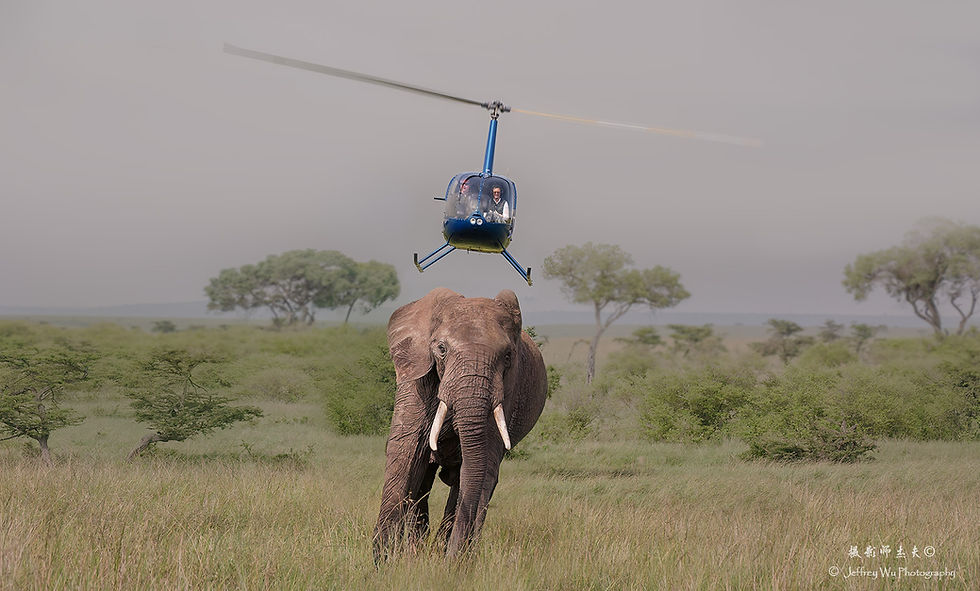
In 2018, Christopher Bartlett first encountered the Mara Elephant Project (MEP) when the organisation was still in its infancy. At the time, operations were limited and resources were scarce. A helicopter had just been donated, marking a crucial step in their early anti-poaching efforts.
Since then, MEP has evolved into a highly organised and efficient conservation structure, working in close collaboration with government authorities, local communities, and conservation partners across the region.
The Mara Elephant Project was formally founded in 2011 and operates in Kenya’s Greater Mara ecosystem.

Its vision
Protecting elephants and their habitats across the Greater Mara Ecosystem
Its mission
A stable and healthy elephant population coexisting peacefully with people across the Greater Mara Ecosystem
The Human-Elephant Conflict (HEC)
This ecosystem is under increasing pressure. Elephant populations are declining due to habitat loss driven by rapid human population growth, land fragmentation, human-elephant conflict, and, historically, ivory poaching.
In 2012, poaching represented the most immediate threat, with ninety-six elephants killed in the Mara for their ivory. Today, the situation has shifted. Habitat loss and human-elephant conflict now represent the most critical challenges.
The human population around the Mara is growing at more than ten per cent per year, over three times the global average. This expansion brings permanent settlements, fenced land, crop-based agriculture, and deforestation. Wildlife corridors are being blocked, and encounters between people and elephants are becoming more frequent.
Human-elephant conflict describes the range of negative interactions that occur when people and elephants share space. For elephants, this often involves crop-raiding and damage to infrastructure. In more severe cases, it can result in injury or loss of life.
Elephants are highly intelligent and adapt quickly. They develop techniques to access crops while avoiding deterrents, sometimes destroying entire fields in a single night. They are particularly drawn to maize and sorghum, and as agriculture expands into wildlife areas, these encounters increase.

15 YEARS OF IMPACT
Since 2016, MEP has recorded a sharp rise in crop damage incidents, from eighty-four cases in 2016 to nearly three hundred in 2024. In the same period, elephant deaths resulting from conflict have exceeded those caused by poaching.
It is within this context that the Mara Elephant Project operates, focusing on four key priorities:
protecting elephant populations
protecting elephant habitats
promoting human-elephant coexistence
restoring landscape connectivity
Its 15 years of existence resulted in the following outcomes:

A Method Built on Data and Action
In the Maa language, “Mara” means “dot.” MEP’s approach connects these dots through a structured method.

Monitor
MEP uses innovative technologies, many developed in-house, to track elephants, habitats, and human activity across the ecosystem. These include GPS collars, EarthRanger, ElephantBook, TerraChart, and Landscape Dynamics.
Evaluate
Data is analysed in partnership with other organisations to produce practical insights. These inform policy decisions, land-use planning, and the deployment of conservation resources.
Protect
More than one hundred Kenyan rangers and researchers work alongside government agencies to protect elephants, support communities, and maintain critical habitats.
Operations on the Ground
Mep operates through different projects.
Anti-poaching and ranger operations
Following the poaching crisis in 2011, elephant populations have begun to recover, and attention has increasingly shifted towards coexistence.
The ranger structure includes ten total ranger teamss dedicated to forest protection, encroachment control, and human-elephant conflict mitigation.
Early conflict response relied on vehicles and firecrackers. This has evolved significantly. Thermal drones are now widely used, with each team operating two drones. Helicopters are rarely required due to the efficiency of these systems.
Mara Elephant Project: Drone Training Ranger Launching a Drone to Reduce Human-Elephant Conflict Mara Elephant Project: Drone Training
In 2025 alone, four hundred and fifty human-elephant conflict incidents were successfully resolved.
Monitoring efforts include population counts, surveillance, and movement tracking. Around one hundred elephants have been collared to better understand movement patterns, including cross-border movements, and to protect individuals in high-risk areas. Approval is pending to expand this work further.
Human-Elephant Coexistence and Alternative Crops
MEP is actively testing elephant-friendly crops to reduce conflict. Crop-raiding affects not only elephants but also species such as hippos and vervet monkeys.
Crops under trial include chillies, rosemary, eucalyptus, lavender, and tea tree. A one-hectare pilot site has shown particularly strong results with rosemary, which requires limited water and minimal maintenance.
Partnerships with oil distilleries are being developed to create viable distribution channels. This introduces an economic component, allowing communities to generate income from alternative crops.
At the same time, food-security initiatives provide vegetable and fruit seedlings to households. This supports communities as they transition towards new agricultural models.
The programme is expanding steadily, with a strong focus on engaging women. A structured cohort approach has led to a threefold increase in participation.
Community members growing alternative crops to reduce human-elephant conflict Seedling being planted in the Mara Elephant Project alternative crops project
Habitat Protection and Wildlife Corridors
Habitat protection remains central to MEP’s work, particularly the corridor linking Amboseli, Loita, and Tanzania.
In the Loita forest, land subdivision has placed pressure on the ecosystem. MEP compensates landowners to maintain forest integrity and prevent deforestation. Without this model, degradation would likely accelerate, as seen in other areas.
Approximately half of the targeted land has been secured. The full project is expected to take up to five years.
In parallel, communities are exploring carbon-credit models to generate sustainable income. A GIS mapping study is underway to assess the forest’s potential for investment.

Species-Specific Protection
A high-priority conservation area has been identified due to the presence of the mountain bongo antelope. Fewer than fifty individuals are believed to remain in Kenya, and the species is considered functionally absent from the wild. Camera-trap images from early January 2026 confirmed recent activity.
This area faces illegal logging and encroachment. Protection efforts include increased monitoring, ranger deployment, and coordination with the Kenya Wildlife Service, Kenya Forest Service, and local authorities.
Strategy Towards 2030
MEP's Strategic Plan sets ambitious goals to reduce human-elephant conflict and strengthen conservation by 2030:
Human-Elephant Coexistence: Expanding outreach and education to promote harmony between people and elephants while enhancing MEP's holistic conservation model.
Sustainable Development: Protecting more habitats and engaging communities through conservation education and partnerships that support both livelihoods and ecosystems.
Elephant Safety and Security: Leveraging innovative monitoring technologies and cross-border collaboration, including the creation of the Elephant Conservation Organization (ECO) in Tanzania. https://ecotz.org/
Organizational Growth: Fostering a culture of philanthropy and building a diverse network of supporters to drive long-term, transformative change.
Discover the full strategy here.
Supporting the Work
MEP outlines several practical ways to contribute:
150$ - FOREST CUSTODIANS
Alongside partners, MEP is providing payments to landowners who agree to protect their parcel of land and prevent deforestation. These payments supplement future lost income and encourage them to be custodians of the forest. This donation can compensate one landowner to protect their land against deforestation.
400$ - CONSERVATION EDUCATION
Engaging with the next generation of conservation heroes is critical to fostering coexistence. Your kindness can facilitate a conservation book club in one school to strengthen conservation knowledge, practical skills, and local participation in environmental protection.
$8,400 - AERIAL FLEET
MEP deploys two drones for each ranger team. By adding one additional drone to a ranger team, you help them remain adaptable while responding to unpredictable human-elephant conflict incidents to better safeguard the Mara's wildlife and people.
The complete overview of their needs can be seen here :
A Way to Experience It Firsthand
The Indigo Earth Foundation organises a voluntourism and safari programme in Kenya, within the Greater Maasai Mara ecosystem.
The trip runs from 8 to 20 November 2026 and is structured in three phases:
Two days in Nairobi
Five days contributing to conservation and community projects in Enarau Conservancy
Five days on safari in Naboisho Conservancy and the Maasai Mara National Reserve
This is not a standard safari. The programme is designed to give a clear understanding of the conservation challenges in Kenya, with direct exposure to the realities on the ground, before moving into a five-day wildlife experience.
As part of the itinerary, participants will visit the Mara Elephant Project headquarters. This includes a conservation briefing, insight into daily operations, and direct exchange with ranger teams. It is an opportunity to see how human-elephant conflict is managed in practice.
If you are looking to combine safari with purpose, this is one way to do it.
Explore the full itinerary and plan a trip that contributes to the ecosystems you are visiting:

How to Get Involved
If you have read this far, you already understand what is at stake.
There are several ways to actively support the Mara Elephant Project and contribute to real conservation work on the ground.
Take on an Ultramarathon in Kenya
You can take part in fundraising initiatives, including the ultramarathon taking place on November 14, 2026.
All proceeds are directed towards conservation programmes, including MEP.
Registration opens on 1 July 2026, with further details to follow online.

Visit Mara Elephant Project Headquarters
If you are travelling to Kenya, you can go a step further. Visits to the Mara Elephant Project can be organised for small groups. These are not passive experiences. You will meet the research team, see how drone operations work in the field, and gain direct insight into habitat protection and human-elephant coexistence programmes.
You can also support specific initiatives depending on what resonates most with you. Contributions can help protect forest land, fund conservation education in schools, or strengthen ranger teams through improved equipment such as drones.
FOLLOW THEIR WORK
Or you can simply start by following their work (Instagram, Facebook, Vimeo, Twitter/X, LinkedIn, TikTok, Blue sky).
Stay informed, share what they are doing, and bring more people into the conversation.
Visit their website and subscribe to their newsletter, to be part of the herd.

Learn more through the Indigo Earth Foundation website

Because conservation at this scale does not happen in isolation. It depends on people deciding to be involved.
Photo credit: Mara Elephant Project


Comments