
How Musekese Conservation Is Safeguarding Wildlife in Kafue

In November 2025, Christopher Bartlett, founder of Indigo Safaris and the Indigo Earth Foundation, took part in an educational trip to Zambia with Classic Zambia. Whenever possible, he seeks to gain a clear understanding of how lodges contribute to conservation in the regions where they operate.
Musekese Conservation was founded by two of Classic Zambia’s founders, Phil Jeffery and Tyrone Mc Keith. Today, Classic Zambia supports Musekese Conservation through a conservation levy and guest visits. A significant part of the research and monitoring programme is also funded through tourism revenue from Classic Zambia.
A detailed presentation of the organisation was delivered by the team on site and is regularly shared with guests visiting the camps. The presentation begins by outlining the areas in which Musekese Conservation operates, and aims to show how Musekese Conservation is safeguarding wildlife in Kafue.

From National Park to Game Management Areas
When Musekese Conservation was first established, its activities were concentrated within Kafue National Park. This changed following the arrival of African Parks, which entered into a 20-year co-management agreement with the Zambian Government for Kafue National Park, establishing what is now known as Greater Kafue Landscapes Limited (GKLL).
As part of this transition, Musekese Conservation was requested to shift its resource protection activities out of the National Park and refocus its operations within the surrounding Game Management Areas (GMAs). This realignment ensured clear role delineation, avoided duplication of effort, and positioned Musekese Conservation to concentrate on areas where human pressure and land-use change are most acute.
Game Management Areas are multi-use conservation landscapes where regulated human activity is permitted, including settlement, farming, and the sustainable use of natural resources. Far from being peripheral to conservation efforts, GMAs are ecologically integral to the wider protected-area network. They contain critical habitats, seasonal ranges, and wildlife corridors that sustain animal populations beyond the boundaries of National Parks.
The ecological health and effective management of Game Management Areas directly underpin the long-term viability of adjacent National Parks.
When GMAs are well managed, they reduce edge pressures, maintain landscape connectivity, and support coexistence between people and wildlife. This ensures that conservation success is achieved at a landscape scale while also supporting local livelihoods.
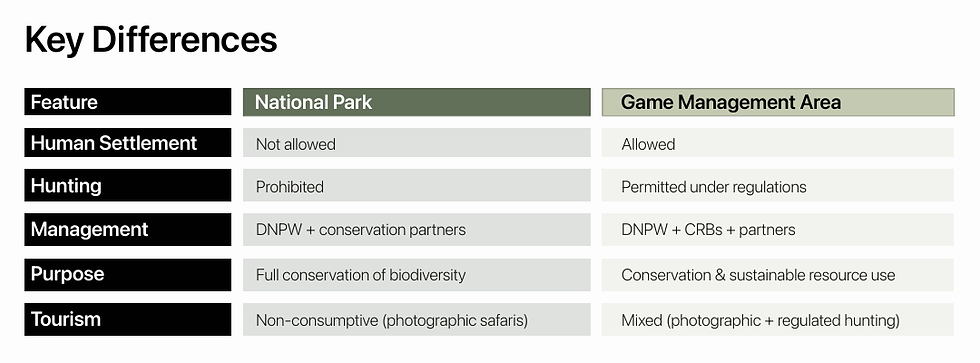
Below is an overview of the distribution of activities across the different areas of operation.

The Pillars Guiding Musekese Conservation’s Work
Resource Protection
The primary threats identified within the Game Management Areas include:
- Illegal encroachment and unplanned settlements,
- Deforestation linked to charcoal production,
- Disruption of the KAZA wildlife corridor, and
- Uncontrolled fires.
This image is essential to understanding the rapid expansion of human activity in the region and the resulting loss of wildlife habitat.

Musekese Conservation maintains a visible presence through trained community scouts and a community engagement officer who works closely with traditional leaders and Community Resource Boards. Satellite mapping and EarthRanger technology enable targeted interventions, while real time aerial surveillance provided by Great Kafue strengthens detection and response capacity.
These combined efforts led to a reduction of more than 50 percent in deforestation within the Mumbwa Game Management Area during the first year. This outcome was later replicated in the Kasonso–Busanga Game Management Area.
Between 2017 and 2025, Musekese Conservation achieved significant progress, as reflected in the data presented by the organisation.

RESEARCH
Research activities are based in the Musekese–Lumbeya area of Kafue National Park. The research programme focuses on large carnivores, including lions, leopards, African wild dogs, cheetahs, and spotted hyenas, as indicators of ecosystem health and recovery. The aim is to understand population status and trends and to assess the impact of conservation interventions by linking research results directly to on-the-ground conservation actions. This work plays a critical role in informing Greater Kafue Landscape Limited by providing robust, evidence-based information to guide conservation planning and management.
The purpose of this research is to analyse carnivore and herbivore population trends across the Game Management Areas and Kafue National Park. While the research and monitoring programme has historically focused on the Musekese–Lumbeya area of Kafue National Park, current efforts are expanding into the neighbouring Mumbwa Game Management Area, where resource protection and community engagement programmes are already active.
A range of methods is applied to build a comprehensive understanding, diversify sources of information, validate observed trends, and assess the effectiveness of conservation actions.
This approach allows Musekese Conservation and its partners to evaluate the effectiveness of protection efforts and adapt management strategies over time.
Below is an example of research programmes implemented between 2020 and 2024.

Musekese Conservation employs a range of research methods, including:
Collaring and intensive monitoring
In collaboration with Zambian Carnivore Programme, the programme tracks several species and individual animals across the landscape. Six lion prides and 5 male coalitions are currently collared, representing a total of 45 lions monitored. Four wild dog packs are monitored, accounting for 46 individuals. In addition, a few cheetahs are fitted with collars and followed closely (1 male coalition and 1 adult female with 2 cubs).
This monitoring provides valuable information on movement patterns, survival rates, and habitat use. Beyond basic movement data, the use of collars increases sighting opportunities and supports the collection of key demographic information. This includes pride size, cub survival, pack structure, and dispersal behaviour. These data points are essential for assessing population stability and long-term reproductive success.
Collaring Operation Musekese Conservation Telemetry Search Musekese Conservation
CAMERA TRAPS
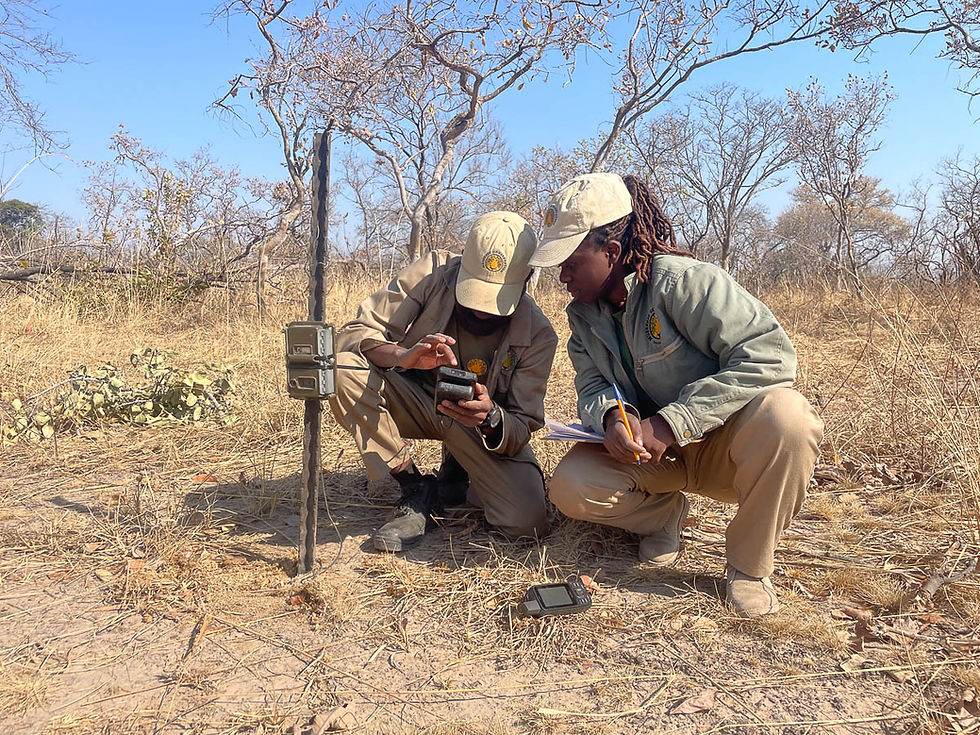
In collaboration with Panthera, camera traps are used to conduct density surveys for key carnivore species, including lions, leopards, and spotted hyenas. The data collected supports park management decisions and contributes to reliable population estimates.
Additional cameras funded through sponsorship are installed around research camps and selected tourism lodges. These locations are monitored to better understand wildlife activity in areas with regular human presence. The images collected provide insight into species occurrence, activity patterns, and seasonal movements.
The expansion of the camera trap network is essential. Some units are stolen, while others fail due to wear or environmental conditions. As a result, replacement and reinforcement of the system is an ongoing requirement.
Musekese Conservation aims to expand its camera trapping programme within the Mumbwa Game Management Area. Each camera unit costs approximately 150 US dollars. Once import charges are included, the total cost is close to 200 US dollars per unit.
The selected camera models capture colour photographs and video footage, including during the wet season. Their solar capability removes the need for frequent battery replacement, which has previously been a major operational challenge.
Musekese Conservation is seeking funding for an additional 144 camera traps, equivalent to 72 monitoring stations. This expansion would allow full coverage of the south eastern section of the Musekese-Lumbeya area, which is currently under monitored.
Below is an example of images captured through the camera trap programme.
Hyena captured on camera trap Lioness and cub captured on camera trap
Approximate camera trap location below:

Search and Encounter surveys
To complement camera trap monitoring and improve lion identification for more accurate density estimates, Musekese Conservation began conducting vehicle-based Search and Encounter surveys. These targeted surveys have helped identify lions that were not previously detected through camera trap data, intensive monitoring activities, or citizen science records. This has highlighted the value of this method in developing a more complete understanding of the lion population.

| 2022 | 2023 | 2024 | 2025 |
Effort (km) | 5,909 | 6,671 | 6,394 | 4,410km |
Coverage (km2) | 732 | 829 | 745 | 507km2 |
Unique captures | 88 | 138 | 152 | 93 |
# individuals | 18 | 28 | 34 | 32 |
Density / 100km2 | 1.02 | 1.67 (95% CI: 1.14 - 2.44) | 1.85 (95% CI: 1.24 - 2.74) | 1.90 (95% CI: 1.28 - 2.81) |
CITIZEN SCIENCE PROGRAMMES
In 2025, through the citizen science program, Classic Zambia’s Musekese Camp vehicles covered 9,192 km across 143 patrols, collecting data for citizen science. During this period, guides recorded 73 lion sightings, 73 leopard sightings, and 6 wild dog sightings.
Not only does citizen science expand data coverage in tourism areas (allowing the research team to focus on more remote and higher-risk zones where carnivore populations are less well understood) but in 2025 it also directly contributed to on-the-ground conservation outcomes. During a routine game drive, Classic Zambia guides located a wild dog pack in which one individual had been caught in a snare. Rapid assistance was coordinated with the Zambia Carnivore Programme (ZCP) and the Department of National Parks and Wildlife (DNPW), resulting in the successful removal of the snare. In addition, another individual from the pack was collared, enabling Musekese Conservation’s research and monitoring team to track the recovery of the previously snared animal.
Later in the year, this collaborative approach again proved critical when Classic Zambia guides located one of the Kamasot pride adult females that the research team had been attempting to collar for an extended period. The sighting enabled rapid coordination with ZCP, leading to the successful collaring of the individual and the initiation of intensive monitoring for the pride.


INDIVIDUAL IDENTIFICATION
To support accurate individual identification, Musekese Conservation has developed identification booklets featuring all known large carnivores monitored within the programme. These guides highlight distinctive coat patterns and whisker spot arrangements, allowing guests and guides to match animals observed in the field with confirmed individuals. This process improves the accuracy of data submitted through citizen science initiatives. The research and monitoring team also relies on these booklets to validate individual identifications during fieldwork.
How do you id a leopard via whisker spots How do you id a leopard via body rosettes and age How do you name a leopard Musekese Conservation Example of an ID of a leopard Musekese Conservation
HERBIVORE TRANSECTS
Understanding herbivore abundance and distribution is essential for restoring ecological balance and supporting the recovery of large carnivores. Across the Greater Kafue Ecosystem, prolonged bushmeat poaching and repeated fire events have significantly reduced prey populations. This decline has directly affected the recovery potential of predator species that depend on them.
Since 2021, in collaboration with Zambian Carnivore Programme, Musekese Conservation has carried out biannual distance sampling surveys across the Musekese-Lumbeya region. A total of 25 line transects are currently monitored, covering 128 kilometres of key habitat. The results of these surveys already inform land management and fire planning decisions, while supporting the identification of priority areas for targeted intervention.

RESULTS
Since Musekese Conservation’s inception in the landscape together with other partners, numbers of large carnivores have slowly risen, and individuals directly caught and killed by snares fewer and fewer.
But even with increases in capacity to the protection of prey to sustain healthy numbers of large carnivores, nature takes time to recover.
In the Musekese Lumbeya area, Musekese Conservation data shows that lion densities are just under 2 lions/100km2. Adult survival is high, but cub recruitment is low keeping the population at a threshold maintained by prey depletion.
Wild dogs and cheetah in the Greater Kafue Landscape has some of the largest home ranges recorded. With these large movements, risk of roadkill mortalities or direct snaring is a real risk. But with the increased efforts in intensive monitoring of these vulnerable species, we are able to react more swiftly to any dangerous situation or high-risk area they may occupy.
The Musekese Lumbeya area continues to remain a stronghold for leopards, with the highest leopard density recorded across the Greater Kafue Landscape at an astonishing 11.4 leopards / 100km2, comparing to some of the highest densities in Africa.
Below is an example of data collected by the research team.

The following excerpt from the 2023–2024 annual report illustrates the impact of Musekese Conservation’s work:

COMMUNITY ENGAGEMENT
Game Management Areas are co managed through collaboration between Community Resource Boards (CRBs), traditional leaders, and conservation organisations. This structure allows local communities to participate directly in conservation efforts and to benefit from them.
Engagement is carried out through Community Resource Boards, Village Action Groups, traditional leadership structures, and regular community meetings. These forums are used to address key issues such as human–wildlife conflict and encroachment within Game Management Areas.

The objective is to establish programmes that encourage a shift in mindset towards recognising the landscape as protected, valuable, and beneficial. Achieving this requires that local communities experience direct benefits from conservation initiatives.
Musekese Conservation highlighted several key activities that have been a focus of their community engagement efforts.
CONSERVATION EDUCATION CLUBS
Those clubs have been a central component of this work. Since 2022, Musekese Conservation has recorded a steady increase in the number of clubs established, along with a rise in the number of students reached through these programmes. Club activities include:
Organised visits to Kafue National Park through the Kids in the Kafue initiative,
Litter collection activities,
Educational film screenings, and
Structured conservation lessons.

Women’s conservation saving clubs
They focus on supporting improved household livelihoods through structured saving initiatives. Participants are encouraged to set aside funds that contribute to family resilience and financial stability. Club activities also include community litter collection, organised cleaning campaigns, and conservation awareness actions at village level.

COMMUNITY EDUCATION SUPPORT
This is an education assistance initiative designed for vulnerable children. Two pupils are supported through each Community Resource Board, resulting in a total of eight students currently enrolled in the programme.
Musekese Conservation delivers its community outreach through several engagement channels. These include Village Action Group meetings, human wildlife conflict awareness sessions, community clean up campaigns, broader conservation awareness activities, and sports tournaments used as platforms for conservation messaging.
LOOKING AHEAD
Musekese Conservation has identified several priority areas for future development.
Within Community Engagement, planned objectives include expanding:
Conservation education clubs to additional schools,
Scaling women’s savings initiatives to more villages,
Securing long term funding for community projects,
Strengthening Community Resource Board governance structures, and
Building leadership capacity among youth and women.
Within Research and Monitoring, future priorities include:
The development of cheetah and wild dog marking site monitoring through camera traps,
The expansion of monitoring work in the Mumbwa Game Management Area through search and encounter surveys, camera trapping
Further expansion of the camera trap network within the Musekese Lumbeya area, and
Broader biodiversity monitoring activities through acoustic monitoring of birds, amphibians and insects.
Musekese Conservation also recognises potential to extend its approach into the Kafue–West Lunga Wildlife Corridor. This corridor represents a critical ecological link that is currently under threat from encroachment and illegal logging.
INDIGO EARTH FOUNDATION SUPPORT
Indigo Earth Foundation has chosen to support Musekese Conservation by adding the organisation to the portfolio of initiatives it actively assists. This support focuses on promoting their work, raising awareness of their conservation and community programmes, and assisting in securing additional funding.
In addition, Indigo Earth Foundation has provided a donation towards the purchase of additional camera traps. This contribution supports predator monitoring efforts in an area that is currently under monitored.
How You Can Support This Work
Direct Contributions
Make a direct donation for camera trap for instance (each camera trap costs $200 including all associated costs)
Book a safari with Classic Zambia via Indigo Safaris and gain first hand insight into the work being carried out on the ground

Every contribution matters.
Awareness and Engagement
Discover more about them on our website

Share ideas to help raise additional funds
We welcome all questions. Feel free to reach out by email.
#MusekeseConservation #KafueNationalPark #GreaterKafueLandscape #Zambia #WildlifeConservation #GameManagementAreas #PredatorMonitoring #CarnivoreResearch
#CameraTraps #FieldResearch #TravelWithPurpose #CommunityConservation #IndigoEarthFoundation #AfricanConservation


Comments